How applied improv helps teams grow: an interview with Alfredo Morresi
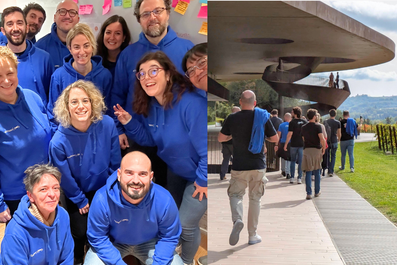
Nephila is a remote-first company. When we do get together in person, that time counts for something different: it lets us slow down, strengthen relationships, and build real cohesion as a group.
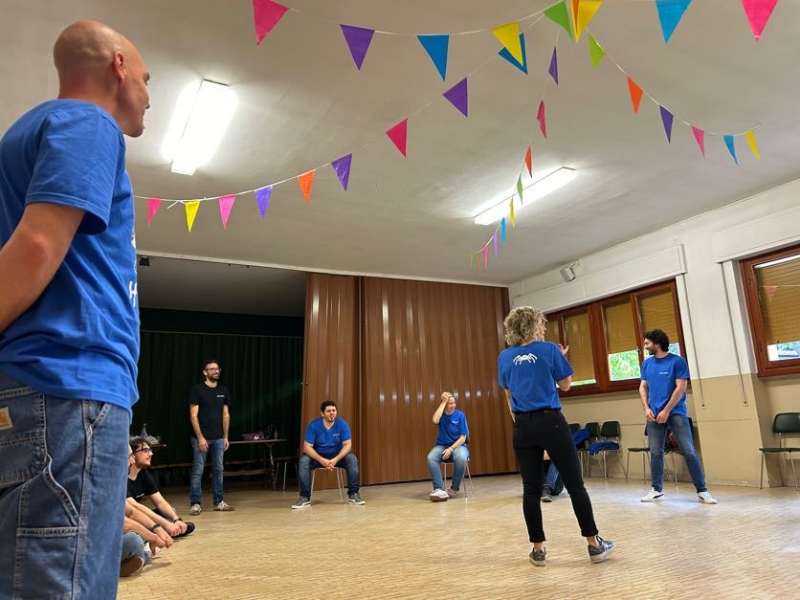
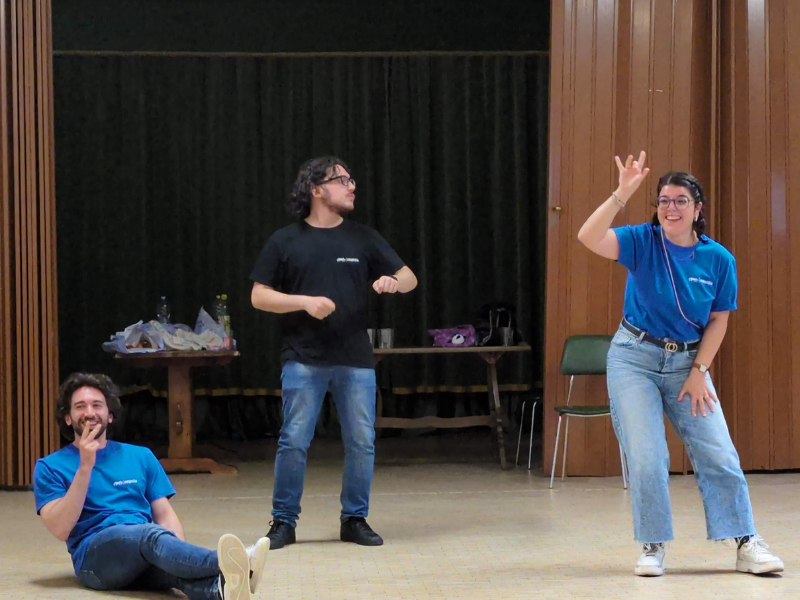
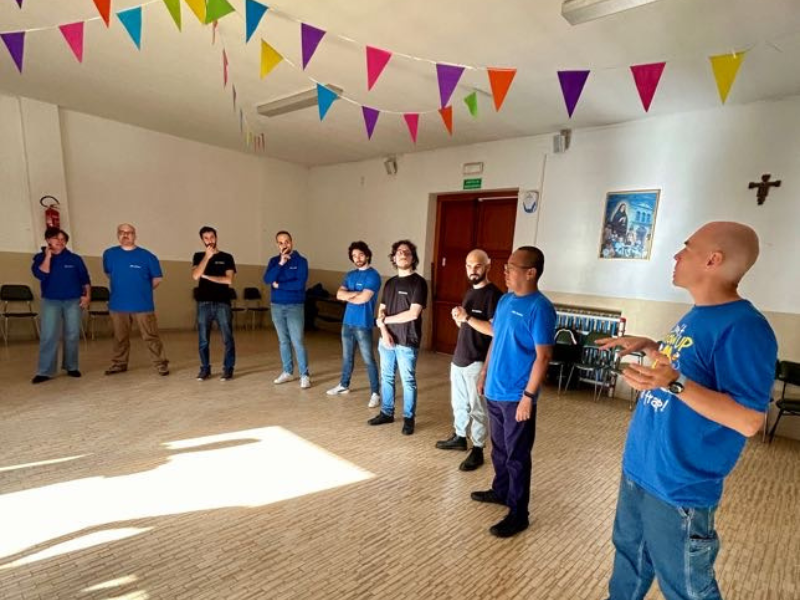
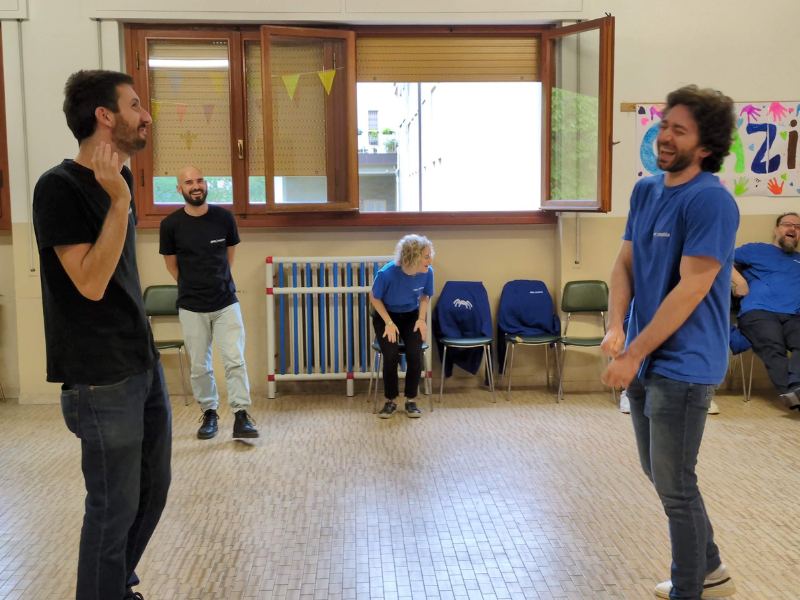
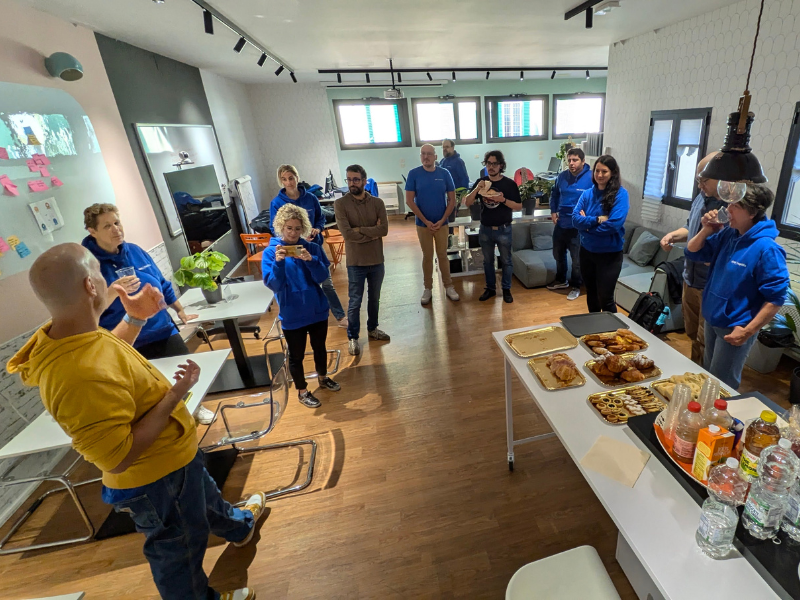
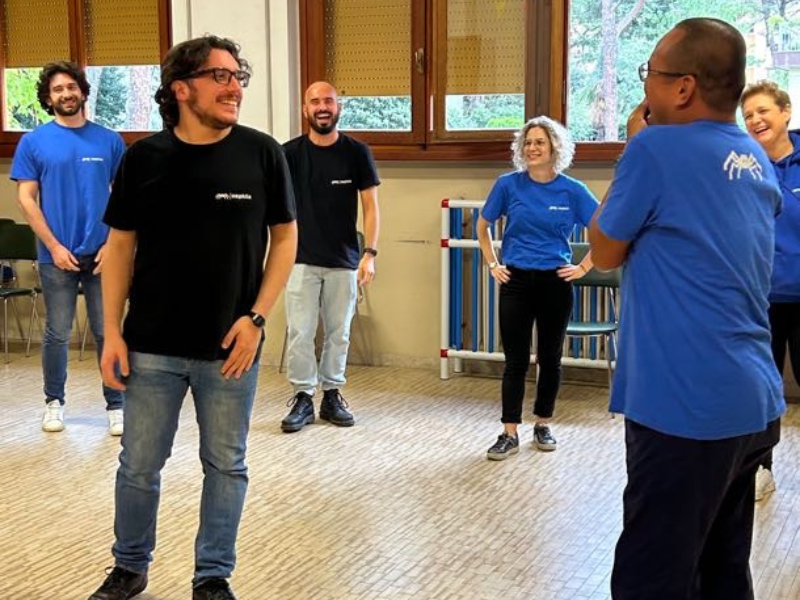
During one of our company retreats, we ran a team-building day built around applied improvisation, working with Alfredo Morresi, Developer Relations at Google. It was a day off the usual script: games, exercises, and improvised scenes that put the group's trust, listening, and adaptability to the test, all in search of new, lighter ways to work and be together.
We sat down with Alfredo to talk about how applied improvisation can help a team grow, and why every team should give it a try. Here's the interview.
***
Alfredo, for those who don’t know you, tell us a little about yourself and what you do.
I work in Developer Relations at Google, mostly helping developers get the most out of Google's technologies. Some of that is education and technical content, some of it is working directly with communities. One thing I run is a program called Google Developer Experts, made up of some of the most passionate and skilled people working with Google's tech around the world. They speak at events, create content, give direct feedback to our product teams, and end up doing two things at once: helping us improve developer products and teaching other people how to use them.
You brought applied improv into Nephila as a team-building tool. How did you first get into it, and what made it turn into something you wanted to go deeper with?
I got into improv because I like public speaking, and it looked like a fun, manageable way to push past my comfort zone. I figured there might be some career upside too. Over time I realized it's 95% about leaving your comfort zone, and it ended up helping me in every part of my life. The professional side was just part of that.
I kept going because after a year or two I saw what it was doing for me, I met people I really connected with, and at some point I realized I couldn't stop.
Did tech communities play a part in that?
I did improv mainly for myself. Then I noticed that a lot of the exercises, games, and techniques I was practicing in class could be repurposed for team building in communities. Communities run on knowledge, but also on relationships, and these tools turn out to be really good at building a sense of group and shared context. That's when I started bringing it into my community work.
What does applied improvisation actually look like for a team? How much does this come down to leaving your comfort zone? And how does improv actually help with that?
For me, improv is a group thing, first and foremost. You get over the fear of messing up because you know there are other people on stage with you, ready to back you up. It’s about mutual trust: together, we build something we could never have planned. The kind of thing that makes you look back and think: “Wait, how did we end up doing that together?”
That’s the side of improv I care most about, because it aligns with what team building is meant to do: create a space where people truly know how to work together. Applied improvisation is one way to create that space, and many of its techniques are especially effective in helping teams get there.
In practice, it brings mind and body together, and always in connection with other people. Some exercises simply don’t work unless the entire group is fully engaged. Some of the ones we did worked because the whole group was active and proactive, not because any one person was. That's how people learn certain results only come from working together, not alone, and that's where the idea of team really takes hold: if we worked well together in this fun context, we can do it in the professional one too.
What challenges come up when you're designing team-building activities for a community?
The main challenge is that initial wariness, the fear. Fear of not pulling it off, of putting yourself out there. People decide they're going to fail before they've even tried.
The incredible thing is that once the ice is broken, because the exercises are fun and they hit something real, you can barely get people to stop. Sometimes it gets to the point where you have to say: "Okay, stop! We'll pick this up next time!"
Another big challenge is how people relate to mistakes. In improv, we allow ourselves a luxury: we're not ashamed of getting it wrong, we admit it's part of the game, and we let others help us fix it. That's the opposite of what usually happens, where everyone's chasing individual excellence. In improv, when someone goes quiet, someone else steps in to fill that space. That's just people helping each other out. We'll get things wrong, but thanks to everyone else those mistakes become something to build on, the moments where stories take off and collaboration happens. It's worth remembering this whenever something's holding you back from stepping outside your comfort zone: most of the time, what's holding you back is the fear of getting it wrong. And getting it wrong is something we're allowed to do.
What are the main obstacles you run into? And which skills do you focus on, the ones you think actually move the needle for a team's growth?
For a team to really function as one, it needs to grow in three main areas. First, domain knowledge: whatever the field, there's a specific technical or professional skill set the team has to handle. Second, company culture: knowing the processes, the way people think, the context you're operating in. Third, growing as a team, how well people actually click: you can have people with solid domain knowledge and a shared culture who still can't work well together. Those, to me, are the three pillars.
In the team-building activities I run, I don't focus on domain knowledge. With communities, it usually comes after I've already worked on the other two pillars, company culture and team building. Once people are in a collaborative setting and feeling good about things, they open up much more easily to learning domain knowledge too. Improv gets the most out of personal collaboration. Meeting and engaging with others, especially at work, is what brings out the culture people actually want to be part of.
With your team, for example, I could see people collaborating with each other, people with different roles in the company; the way they reacted, the way they carried themselves, the different responsibilities. You could sense it, in how those roles and responsibilities showed up in the way people held the stage. It was subtle, nothing overplayed, and to me, that was a really good sign.
Can you share a specific experience? What's the biggest challenge you've faced doing team building?
When you work with communities, with people from all over the world, the biggest challenge is cultural difference. Even when everyone joins in with enthusiasm and by choice, where they come from still shapes how they collaborate. Some cultures are more collaborative, others lean more toward hierarchy and command. Miss those differences, and the experience gives you less than it could.
It's a challenge for me too, because I'm part of my own culture as well. Some things feel normal to me, even "right" in a way. And I'll catch myself labeling certain behaviors as "strange" before I even understand them. They're different, that's all, and different isn't strange.
One concrete example: during an exercise, if you say "whoever wants to go up, go ahead," some cultures will have people stand up on their own, while in others nobody moves until they're called on, or until whoever's higher up takes the first step. If nobody goes up and you don't factor in culture, you won't know if the problem is your exercise or the context. The fix can be simple: give everyone a number at the start and go in order. "Let's start with number one, then two...", that sets up a rotation and the conflict just disappears. But these are the details that completely change how an exercise actually plays out.
Do you have any advice for team leads or managers who want to improve how their team works together?
Just one piece of advice: study. This stuff doesn't happen by accident. It happens because we're human, we run on certain patterns, we're wired a certain way. Some people have an almost natural gift for reading how we work, high emotional intelligence, and collaborating with others just comes easier to them. But that doesn't mean you can just wing it as a team manager. You have to study it, the same as you'd study a programming language, a framework, anything else. There's no single formula either: different contexts call for different leadership styles, and you have to know how to adapt.
Don't assume becoming a team lead just happens to you. Someone believed in you, they handed you that responsibility, and now you actually have to put in the work and sharpen those skills. You don't start at one level and stay there the whole way through. It's something you build.
You led us through a team-building activity that gave us so much. How was it working with Nephila? Was there anything you particularly appreciated?
What I appreciated most was the atmosphere. I said this to you pretty much as soon as I arrived: this wasn't your typical corporate setup. I've worked with a lot of communities and teams, and what I found with you all was real cohesion already there, the feeling of a team that already worked as a team. That's not something you can take for granted, especially for people working remotely most of the time.
You're not a huge group, and getting together in person is clearly a big deal for you during the year, and I think that had a lot to do with the energy in the room. I definitely didn't see anyone walking around with that "oh no, not corporate team building" look on their face.
You gave me a great foundation to build everything else on. Communities are made of people, and people bring their history and their old tensions along with them. Finding a group that already worked well together going in is rare, and I really valued that.
I had a great time because this is something I do out of passion, something I love. And it's hard to fully get it until you're actually in it, partly because of how much it hits you emotionally. Improv is an incredibly active thing to do: you burn through a huge amount of energy, physical and mental. But what you get back emotionally is unbelievably bigger. How that works, honestly, I have no idea. There's no law of physics that says energy gets conserved, at most it transforms... there's probably some quantum explanation for this :) But that's how it goes: you give a lot, and you get back even more. You give in the short term, you get back in the long term, because what stays with you is the relationships, the memories, that charge you keep drawing on even weeks later.
So if you're asking how it went for me, here's my answer. Gave a lot, got back even more.
We spent an amazing, really intense day together, and at some point we were basically following you around like the Pied Piper. Were we a good team?
I really think so, and I mean that. I had a great time with you all. Sure, I had my own nerves. Everyone did, honestly. But you all threw yourselves into it from the start. You could tell everyone wanted to do something together. And each person, in their own way, wanted to push past their comfort zone. Nobody was the same person from morning to lunch, or from lunch to dinner. Some more, some less, some sooner, some later, but everyone changed. Me included.
That, to me, is the best part of team building: you can't leave the same way you came in, otherwise nothing changed at all.
Do you have any resources, books, or suggestions for someone who wants to grow a team or get better at working in groups?
More than any specific book, my suggestion is this: growing as a team is something you do together. A book is just a tool, a starting point for action. Want to read something? Great, use it as a jumping-off point. But it's practice that actually gets you there.
Just throw yourself into it again, that's the real advice. Doesn't have to be a full day, doesn't have to be in person either, though body language and physical presence still matter a lot for team-building dynamics. The more you do it, the more you learn. It's a bit backwards compared to technical work, where you study first and then do. With improv, it's the other way around: you do it, and that's how you learn.
Is there anything else you'd like to add or share?
Thank you for believing in me. It was a challenge for me too, I'd never done anything like this before. And that brings me back to the main point: without the group, what I did wouldn't have been possible.
Keep that willingness to put yourselves out there, that's what I'd tell you. Work is work, but it's shaped by how well people are doing, individually and as a team. Take care of that, and everyone benefits.
A lot of workplaces only look at the productive side, often because it's the easiest thing to measure, and everything else gets pushed aside. But at the end of the day, we're human, and there's no getting around that. Let's remember to take care of each other as people, too. Your team haven't forgotten that. I just hope you hold onto it.
***
Applied improvisation teaches people to listen before reacting and to treat mistakes as something to build on. Alfredo brought us into that world for a day, and it left us with a different way of thinking about working as a team. It's not a day we'll forget anytime soon.
***
We wrote this article with the support of AI. If you’re interested in how we use these tools as part of our writing process, you can read more here.